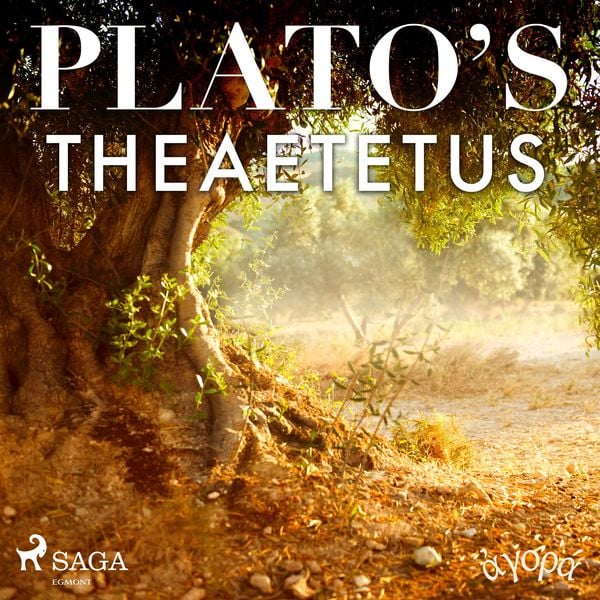
Plato's Theaetetus
Platon
Completo
•
9788726425604
3 horas 12 minutos

Algunos artículos contienen enlaces de afiliados (marcados con un asterisco *). Si hace clic en estos enlaces y compra productos, recibiremos una pequeña comisión sin coste adicional para usted. Su apoyo ayuda a mantener este sitio en funcionamiento y a seguir creando contenidos útiles. Gracias por su apoyo.
De la editorial
Perception, memory, truth, and knowledge all play major roles in this dialogue. What is remarkable about Plato's treatment of those ideas is how contemporary are both the questions and the answers he puts in the mouths of his characters. Socrates is adamant in asserting that he does not know the answers but that his function is simply to help formulate and critically examine the doctrines presented by others. While he was still alive, the great sophist Protagoras was a friend of Theodorus who has subsequently given up abstract philosophical inquiry and now teaches mathematics, astronomy, and logic to young people such as Theaetetus, the most gifted student he has ever encountered. Socrates examines young Theaetetus to determine whether or not what he has learned from Theodorus provides wisdom and truth. The analogies and metaphors that emerge during their conversation foreshadow the theories of mind favored by contemporary cognitive scientists, but Plato's dialogue also raises serious doubts about the cogency of those explanations.
Del mismo autor


SAGA Egmont
-
Cover - Robert Louis Stevenson - Arvingen till Ballantrae
 Robert Louis Stevenson: Arvingen till BallantraeArvingen till BallantraeRobert Louis Stevenson
 -
Cover - Karina Krawczyk - Nazywam się Milion
 Karina Krawczyk: Nazywam się MilionNazywam się MilionKarina Krawczyk
 -
Cover - Elin Wägner - Pohjoistullin tyttösakki
 Elin Wägner: Pohjoistullin tyttösakkiPohjoistullin tyttösakkiElin Wägner
 -
Cover - Barbara Cartland - Den stolta prinsessan
 Barbara Cartland: Den stolta prinsessanSeriesDen stolta prinsessanBarbara Cartland