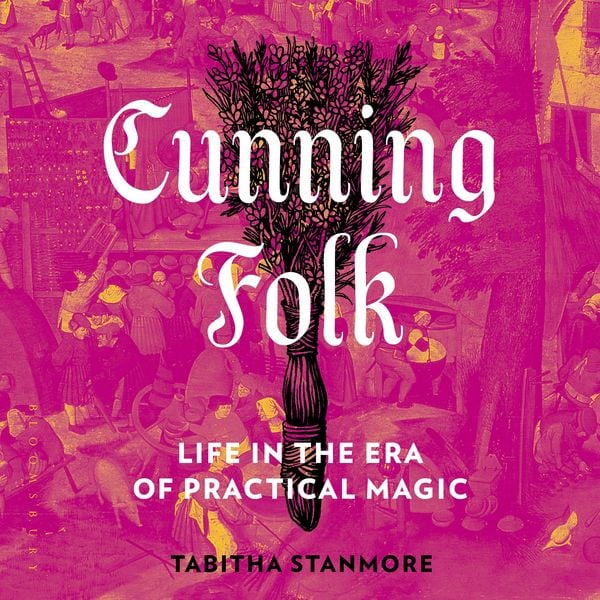
Cunning Folk
Tabitha Stanmore
Unabridged
•
9781639730568
8 hours 16 minutes

Some articles contain affiliate links (marked with an asterisk *). If you click on these links and purchase products, we will receive a small commission at no extra cost to you. Your support helps to keep this site running and to continue creating useful content. Thank you for your support!
From the publisher
Bloomsbury presents Cunning Folk by Tabitha Stanmore, read by Anna Wilson-Jones. 'Rich and lively.'—New York Times Book Review A vibrant look at an unsettled and strangely familiar time that overturns our assumptions about the history of magic. Imagine: it's the year 1600 and you've lost your precious silver spoons, or maybe they've been stolen. Perhaps your child has a fever. Or you're facing a trial. Maybe you're looking for love or escaping a husband. What do you do? In medieval and early modern Europe, your first port of call might have been cunning folk: practitioners of 'service magic.' Neither feared (like witches), nor venerated (like saints), they were essential to daily life. For people across ages, genders, and social ranks, practical magic was a cherished resource for navigating life's many challenges. In historian Tabitha Stanmore's beguiling account, we meet lovelorn widows, dissolute nobles, selfless healers, and renegade monks. We listen in on Queen Elizabeth I's astrology readings and track treasure hunters trying to unearth buried gold without upsetting the fairies that guard it. Much like us, premodern people lived in a bewildering world, buffeted by forces beyond their control. As Stanmore reveals, their faith in magic has much to teach about how to accommodate the irrational in our allegedly enlightened lives today. Charming in every sense, Cunning Folk is at once an immersive reconstruction of a bygone era and a thought-provoking commentary on the beauty and bafflement of being human.
From the same authors


Bloomsbury Academic
-
Cover - Katie Fforde - A Cottage in the Country
 Katie Fforde: A Cottage in the CountryA Cottage in the CountryKatie Fforde
 -
Cover - Debra Curtis - Laws of Love and Logic
 Debra Curtis: Laws of Love and LogicLaws of Love and LogicDebra Curtis
 -
Cover - Slavoj Žižek - Surplus-Enjoyment
 Slavoj Žižek: Surplus-EnjoymentSurplus-EnjoymentSlavoj Žižek
 -
Cover - Slavoj Žižek - Christian Atheism
 Slavoj Žižek: Christian AtheismChristian AtheismSlavoj Žižek